

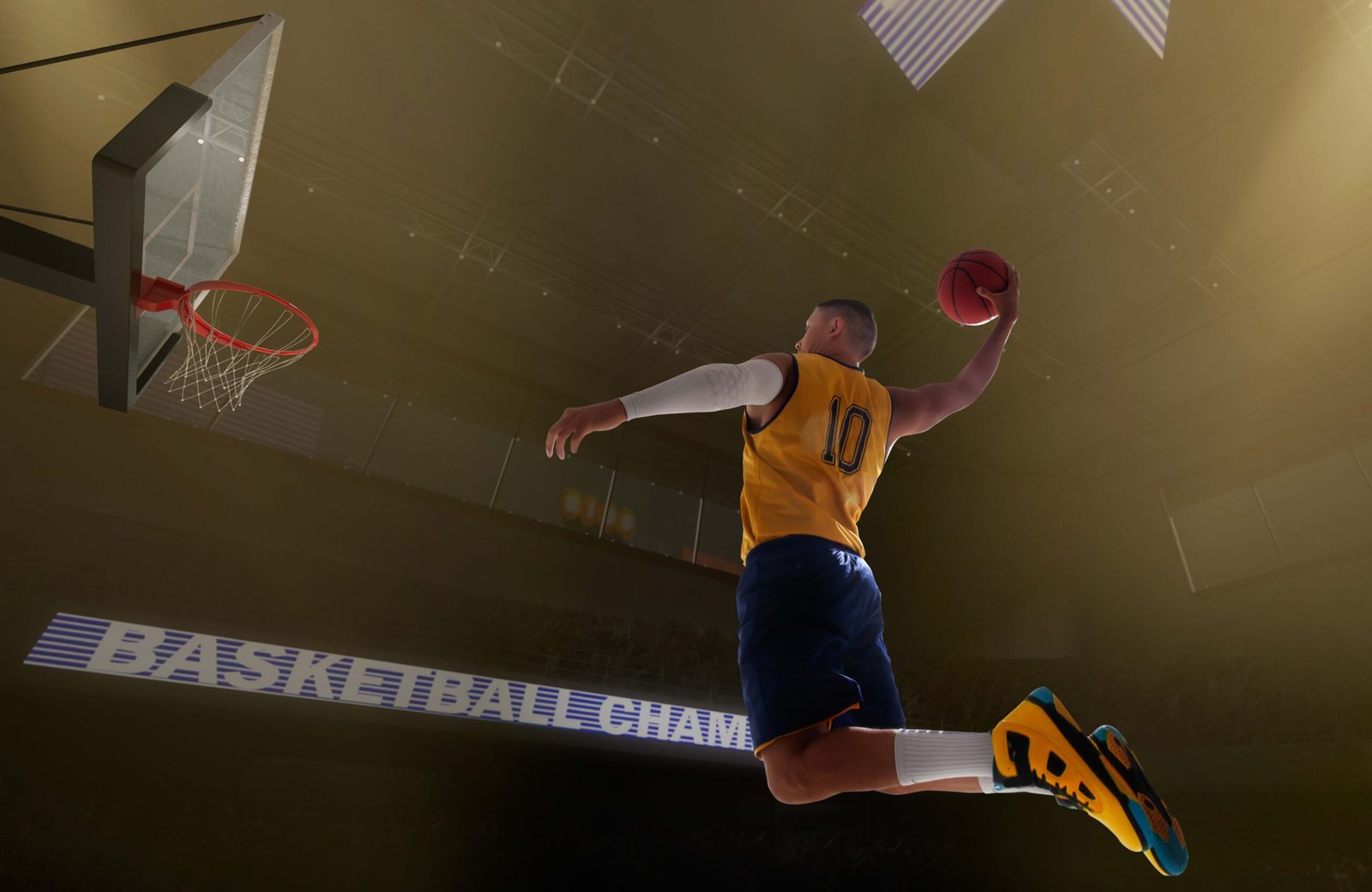
Let’s be completely honest about your basketball shot. If you are stepping onto a court, chucking the ball from your chest, and just hoping it hits the rim, you are making the game way harder than it needs to be. You see guys on television like Steph Curry pull up from thirty feet out and make it look completely effortless, and you wonder why your shot feels heavy, inconsistent, and clunky.
Here is the reality: shooting a basketball isn’t about raw arm strength. It is pure physics and muscle memory.
Most people have a broken shot because they are trying to push the ball toward the rim with both hands, or they are letting the ball sit flat against their palm like a dinner plate. If you want to stop clanking balls off the backboard and actually start hearing that satisfying snap of the net, you need to tear down your mechanics and build them back up from the ground.
Your Power Comes From Your Toes, Not Your Arms
The absolute biggest mistake amateur players make is thinking a jump shot is an upper-body exercise. It isn’t. If your arms are sore after twenty minutes of shooting, your form is completely wrong.
Your shooting power starts at your feet.
Next time you square up to the hoop, don’t point your toes perfectly straight at the rim. It forces your shoulder into an awkward, tight position. Instead, turn your feet slightly to the left (if you are right-handed) at about an eleven-o’clock angle. This small tilt naturally aligns your right hip, your right elbow, and your right shoulder directly with the target.
When you get ready to shoot, bend your knees and drop your hips like you are sitting into a low chair. As you lift the ball, explode upward through your legs. That upward momentum should carry the ball into the air, while your arms are simply there to guide the trajectory.
The Secret of the “Pocket Window”
Where does the ball actually sit before you launch it? If you are pulling the ball back behind your head or holding it right in front of your nose, you are completely blocking your vision and ruining your arc.
You need to catch or hold the ball in your “shot pocket”—which is right around your dominant hip and lower ribs.
As you bring the ball up, your shooting elbow must stay tucked in tight, pointing directly at the rim like a laser sight. If your elbow flares out to the side like a chicken wing, your shot will naturally drift left or right. Keep that elbow under the ball, creating a perfect 90-degree L-shape with your arm. You should be able to peer right underneath the ball with your eyes as you lift it, using that small window to lock your vision onto the back hooks of the rim.
The One-Hand Test and the Finger Space
Here is a quick trick to see if your hand placement is ruined: lift the ball up with just your shooting hand. If it wobbles or falls off, you aren’t balanced.
The basketball should sit entirely on your finger pads, not your palm. There should be enough space between the leather and the center of your hand that you could slide a normal pencil right through it. Your non-shooting hand—your guide hand—is literally just a kickstand. It rests lightly on the side of the ball to keep it from slipping off your hand while you lift it. The second you launch the shot, that guide hand stays perfectly still; it does absolutely zero pushing.
Leave Your Hand in the Cookie Jar
The final piece of the puzzle happens after the ball leaves your fingers. If you pull your hands back down to your sides the instant you release the ball, your shot will fall flat and short every single time.
You must follow through and freeze your hand in the air until the ball hits the floor.
When you snap your wrist at the peak of your jump, think about reaching up and flicking your wrist forward like you are trying to grab a cookie out of a jar on a high shelf. Your index and middle fingers should be pointing down toward the floor, which puts a clean, heavy backspin on the ball. That backspin is what gives you a “soft” shooter’s roll, meaning even if the ball hits the rim, the spin will naturally pull it down into the basket instead of bouncing away wildly.



Leave a Reply